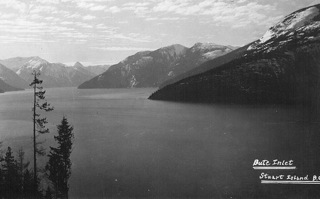
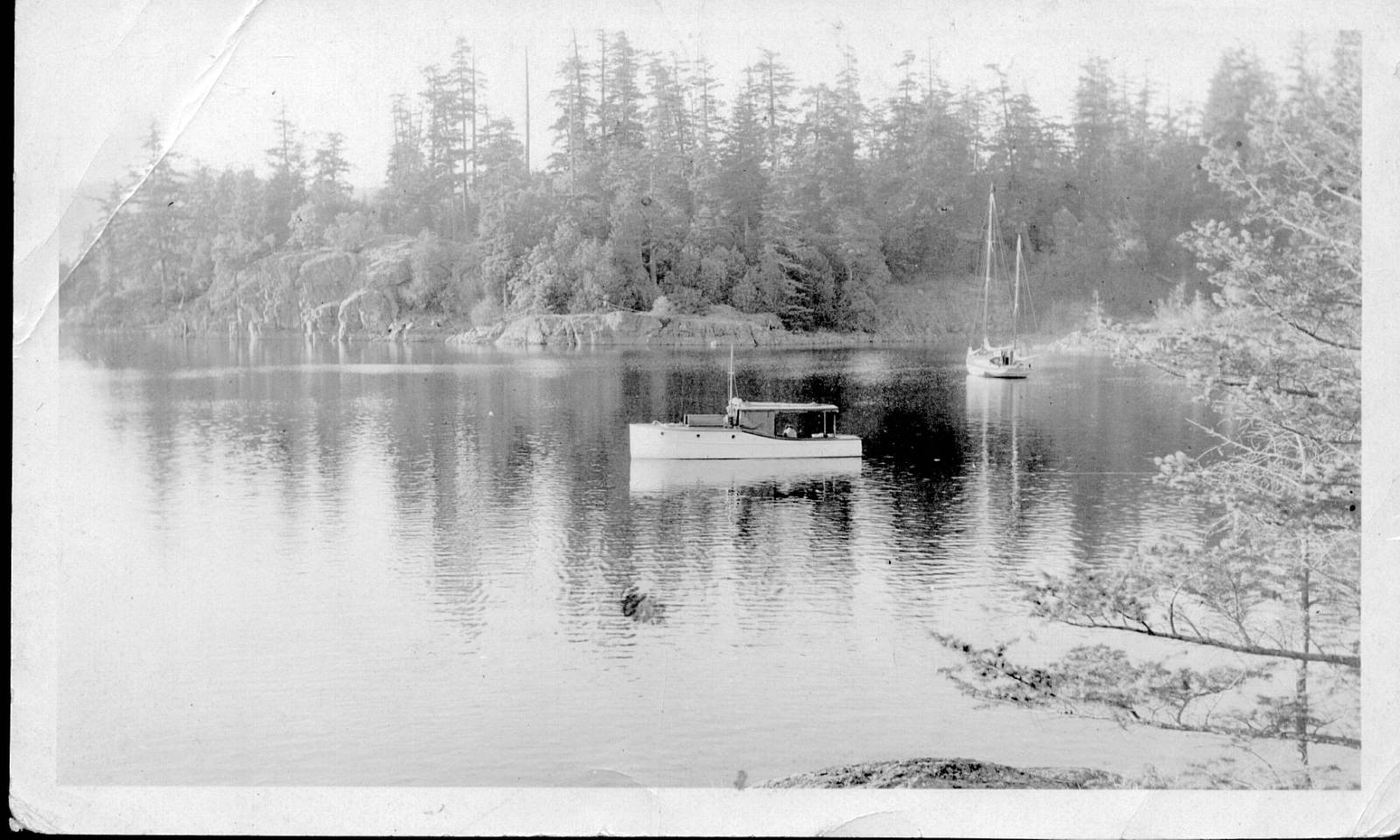
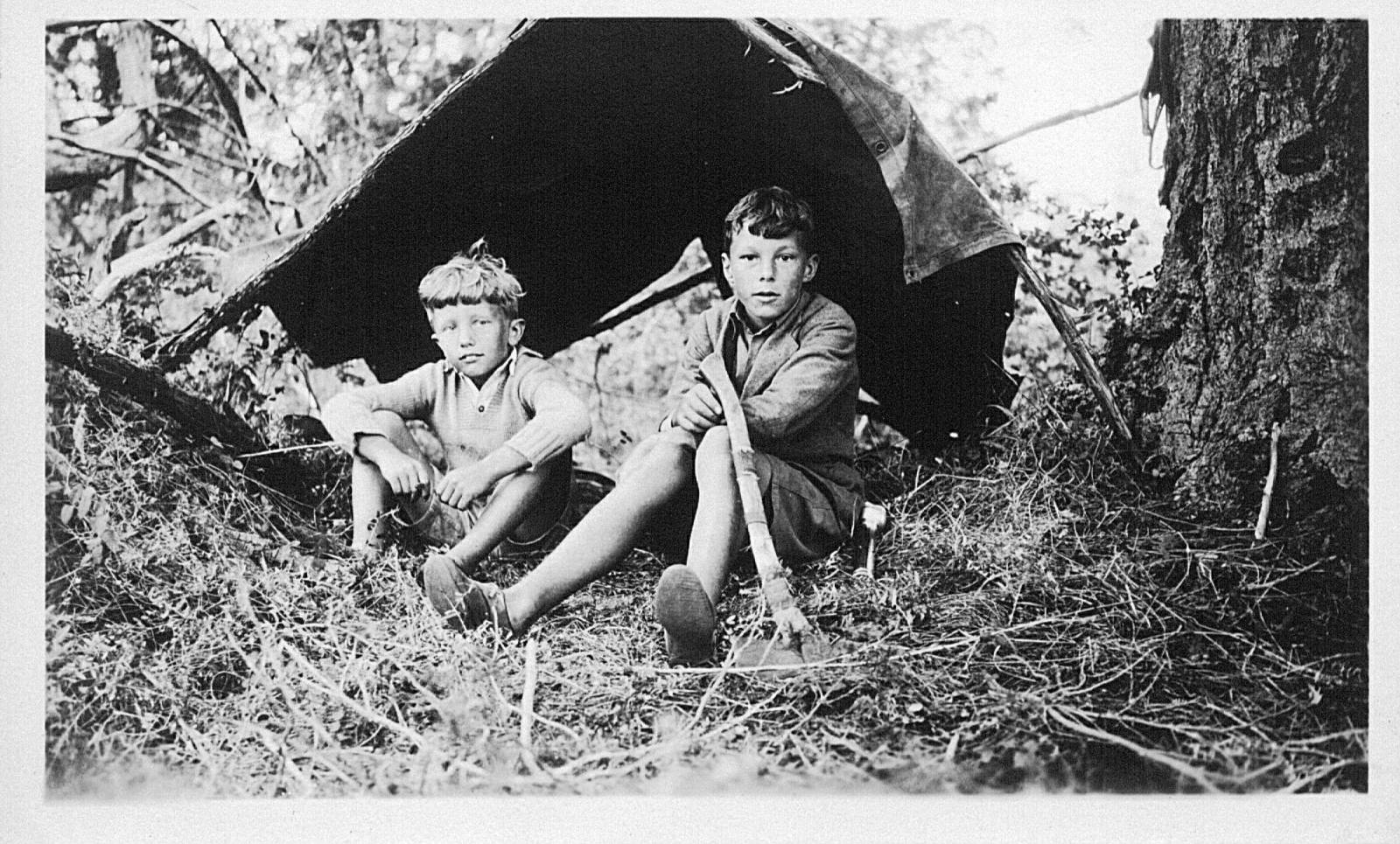
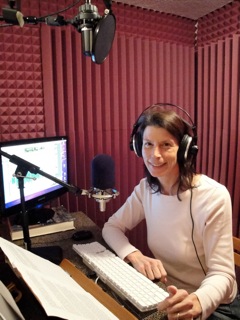
Audiobook narrator Heather Anne Henderson will present the book, a travelogue about a widow and her children sailing the British Columbia waterways nearly a century ago.

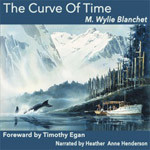
NEWPORT — If you haven’t heard of The Curve of Time, don’t feel bad. It seems the book, published in 1961, is largely unknown — at least in the U.S. But in Canada, the memoir by M. Wylie Blanchet is a beloved classic. And an enduring one, with at least a dozen major editions, including one featuring an introduction by Pulitzer Prize winner Timothy Egan.
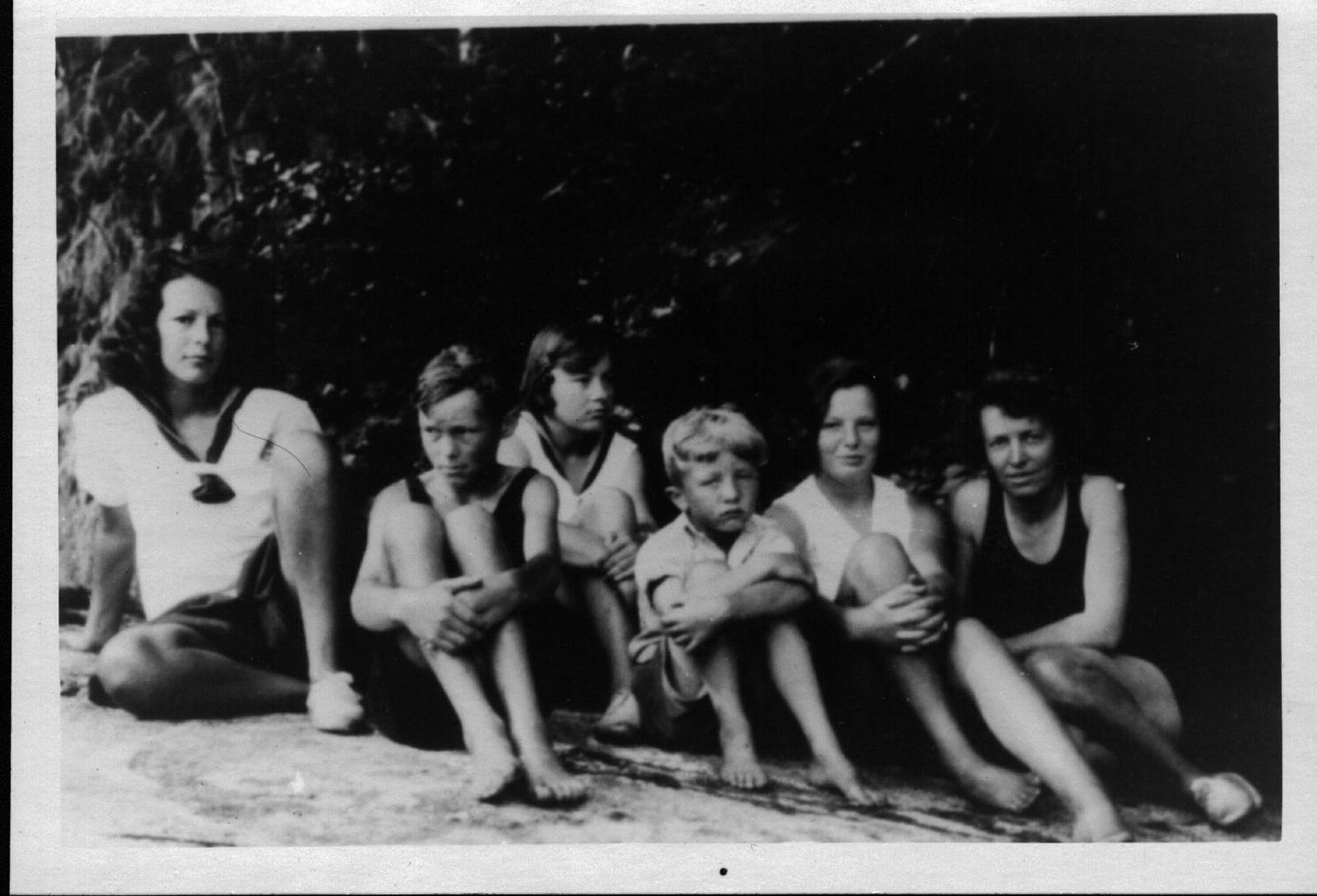
To read it is to inhabit another time, to share a widow’s travelogue of the 1920s and ‘30s on the waterways of British Columbia — with a passel of kids. To listen to it narrated by Oregon’s own professional audiobook narrator Heather Anne Henderson is all of that with a big dash of Wow!, Uh-oh, and Whew!
You can pick up the book at your library or favorite bookstore, listen to it wherever you download your favorite audiobooks or — and this chance comes just once — you can make your way July 17 to the Pacific Maritime Heritage Museum, where Henderson will give a live performance from the only stage with a backdrop of Yaquina Bay. You may not be on the 25-foot Caprice with Blanchet and her clan, but it’s likely the closest you’ll come.

Henderson happened upon The Curve of Time the same way most of us find a good read — someone recommended it. That was about 20 years ago.
“I’ve read a lot of books, and I couldn’t believe I never discovered this book,” Henderson said. “I was just like, where has this been all my life? Instantly it was, and it has remained, one of my favorite books.” Henderson thinks it has stayed somewhat obscure — outside of Canada — because it’s a “quiet” book (and I will add, in an occasionally white-knuckle kind of way) and “so unusual. There’s just not really… I’ve never read a book completely quite like it.”
When Henderson found the travel memoir, she was already a well-established professional audiobook narrator and member of the Screen Actors Guild with a background in theater and journalism.
But even decades into the business of narrating, she still finds herself having to explain to people what she does and how exacting the business can be. Seasoned veterans of Henderson’s caliber are generally trained actors who have attended drama school and are members of the actors guild, she said.
Some assume her title as a professional narrator means she is a storyteller. She’s not. Or an author. It’s not that either — though she has done her share of writing. “It’s doing a live performance as an actor. Just think of me as a violinist who wants to give a solo concert of someone else’s music, like Mozart.”
Henderson prepares to narrate a book by reading it one to three times, which can take an entire week. “It’s essential to read the book carefully at least once — even for an easy romance — because you might not find out until chapter 15 that a particular character has a deep, booming voice or an Algerian accent or something,” she said.
In the prepping stage, she’s meeting the characters, deciding on voices and accents, and getting a sense of the dramatic arc, tone, pace, and even sentence length, which affects breaths. She spends another week going over the spreadsheet of pronunciations — anywhere from 50 to 1,500 words — and will consult with the director about details of the book.

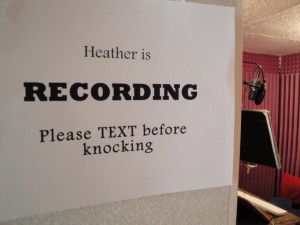
Then, it’s time to go to the studio and record. An easy book of eight listening hours will take Henderson about 16 hours to record. She might stop multiple times on a page to “punch-and-roll” changes when she fumbles or doesn’t like how she “landed” a sentence, or mispronounced, or makes an extraneous noise. She sends each chapter as a separate audio file.
“Meanwhile, my producer’s proofer — another of the maybe 10 people on the production team for a given book — is right behind me, listening to each file I send in, often running it through proofing software, and noting my inevitable mistakes and putting them on a spreadsheet.”
Henderson must read each copyrighted book exactly as printed. Even a simple change like the word “cannot” to “can’t” will be noted and she’ll have to correct it later. “ ‘Can’t’ might have sounded more natural, but it’s my job to make ‘cannot’ sound natural,” she said.
In The Curve of Time, all those hours of preparation, combined with Henderson’s years of experience and study, pay off in a listening experience that some might find actually better than the read. When the old Frenchman talks, you hear that roughhewn accent, and when the ravens carry on conversations, you know the voices.
Early on, in what Blanchet described as the “Year of the Bears,” the author leaves the children on the beach to play, then is suddenly seized by a sense of panic. Listening, you feel her fear, barely daring to breathe as Blanchet rushes back to her brood. There, the children report that a man at the end of the beach has been watching them and he’s “all dressed in black.” And again, you wait, what the…?
But just as the book is full of narrow escapes in nature, it’s also a testament to the beauty of the British Columbia coast, and when Henderson reads of the family gathered around the fire on the beach or coasting on a gentle bay, listeners might find themselves sighing in mutual content.
“It’s really something that people don’t expect until they hear it,” said Henderson. “And then, oh man, it’s fun…. They’re on the edge of their seats; I’m interacting with them; I’m feeling their feedback, and it’s unique.”